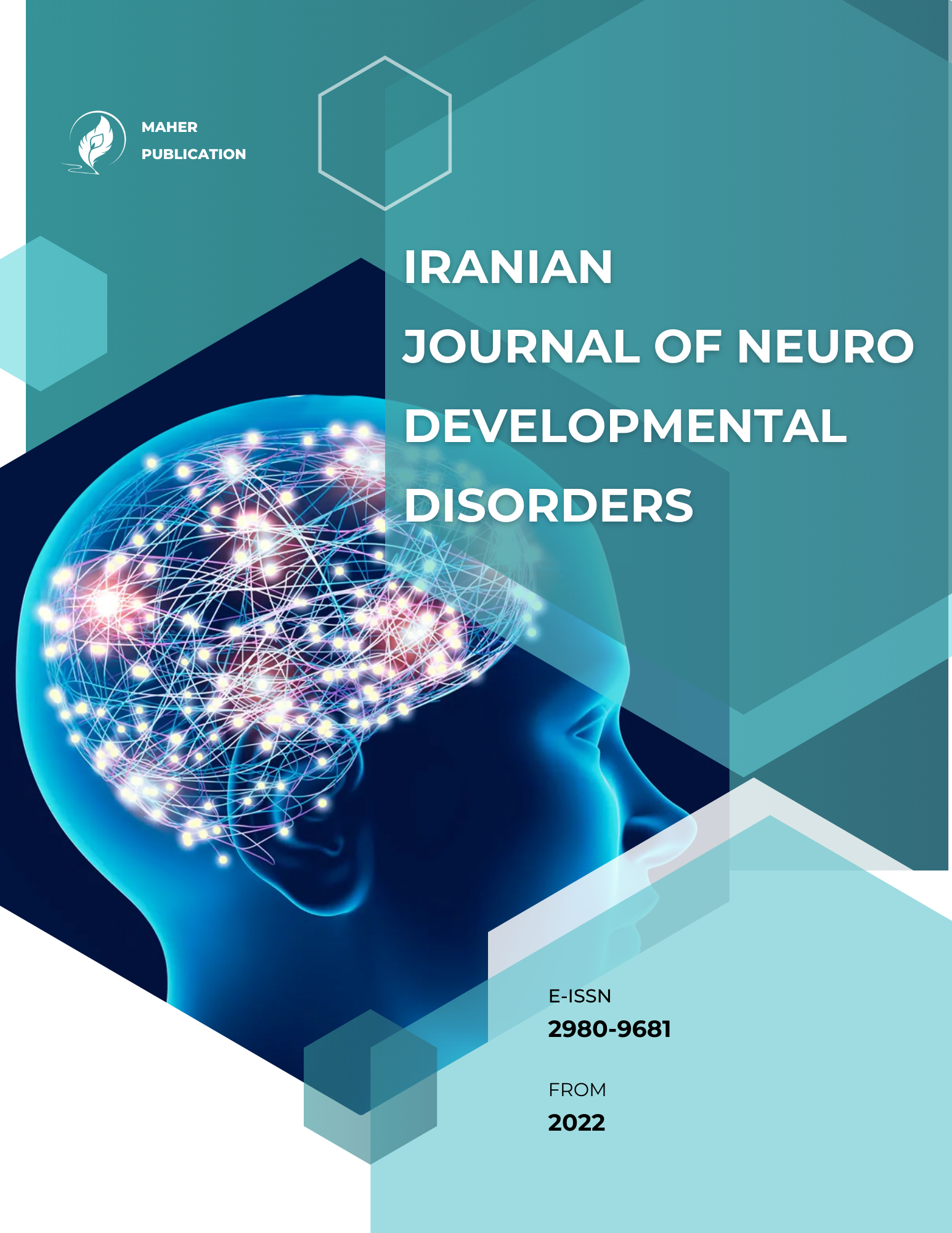
Comparison of the Effectiveness of Imago Therapy and Cognitive-Behavioral Couple Therapy on Dimensions of Care in Relationships and Psychological Capital in Working Couples
DOI:
https://doi.org/10.61838/kman.jndd.3.4.10Keywords:
Imago therapy, cognitive, behavioral couple therapy, dimensions of care in relationships, psychological capitalAbstract
Purpose: The purpose of this study was to compare the effectiveness of Imago therapy and cognitive-behavioral couple therapy on the dimensions of care in relationships and psychological capital in working couples.
Methods and Materials: This study employed an experimental design with a pre-test, post-test, control group, and follow-up. The statistical population comprised all working teacher couples in Tuyserkan, located in Hamadan Province, who were employed during the 2021–2022 period. From this population, 40 individuals were randomly selected and distributed into four groups (two experimental groups and two control groups), with 20 participants in the experimental groups and 20 in the control groups. The experimental groups received training through 10 sessions of Imago therapy and 10 sessions of cognitive-behavioral couple therapy, with each session lasting 90 minutes. The control groups did not receive any training. Data were collected using the Dimensions of Care in Relationships Questionnaire and the Psychological Capital Questionnaire. Multivariate repeated measures analysis of variance was used to analyze the study findings.
Findings: The results of the data analysis indicated that both Imago therapy and cognitive-behavioral couple therapy had a significant effect on the dimensions of care in relationships and the psychological capital of working couples (p < 0.05).
Conclusion: The findings of this study demonstrated that there was no significant difference between the effectiveness of Imago therapy and cognitive-behavioral couple therapy on the dimensions of care in relationships and psychological capital.
Downloads
References
Akbari, M., Shokhmgar, Z., Sanagoo, A., Nasiri, A., Ahange, A., Khaleghi, H., Mohammad Pour, M., & Karami, A. (2021). Comparison of the Effectiveness of Schema Therapy and Cognitive Behavioral Therapy on CommunicationSkills and Problem Solving and Mental Health in Couples with Extra-Marital Experience. ijpn, 9(1), 1-10. http://ijpn.ir/article-1-1476-en.html
Alijani, F., Najafi, S., & Nazari, F. (2022). The Role of Psychological Capital and Differentiation of Self in Predicting Emotional Divorce in Female Teachers [Research]. Journal of Health Promotion Management, 11(4), 12-23. https://doi.org/10.22034/JHPM.11.4.12
Allen, S. H., & Lebow, J. (2023). Family therapy. In H. S. Friedman & C. H. Markey (Eds.), Encyclopedia of Mental Health (Third Edition) (pp. 11-18). Academic Press. https://doi.org/10.1016/B978-0-323-91497-0.00070-9
Amini, M., Guodarzi, M., & Shahgheibi, S. (2021). Comparing the effectiveness of cognitive behavioral couple therapy and EIS model on sexual function, among pregnant women. Avicenna J Nurs Midwifery Care, 29(3), 233-244. https://doi.org/10.30699/ajnmc.29.3.233
Asadi, R., Kazemi, R., & Mousazadeh, T. (2022). The effectiveness of cognitive-behavioral couple therapy on reducing marital burnout and sexual intimacy of couples referring to counseling centers in Tabriz. medical journal of mashhad university of medical sciences, 65(4). https://doi.org/10.22038/mjms.2022.67905.4025
Azimi, B., Farahbakhsh, K., Salimi Bajestani, H., & Asgari, M. (2021). Justifying Behaviors of Internet Infidelity: Coping Strategies with Marital Conflicts: A Phenomenological Study. RJMS, 28(2), 104-116. http://rjms.iums.ac.ir/article-1-6647-fa.html
Beheshtinejad, S., Khayatan, F., & Manshaei, G. R. (2022). A Comparison between the Effectiveness of Mindfulness and Imagotherapy on Intimacy and Commitment among Couples Having Spouses with Attention Deficit Hyperactivity Disorder. https://www.sid.ir/paper/1031753/en
Camgoz, S. M. (2014). The Role of Savoring in Work-Family Conflict. Social Behavior and Personality: an international journal, 42(2), 177-188. https://doi.org/10.2224/sbp.2014.42.2.177
Darbani, S. A., & Parsakia, K. (2023). Investigating the effectiveness of strength-based counseling on adolescent resilience. Journal of Adolescent and Youth Psychological Studies (JAYPS), 4(5), 169-175. https://doi.org/10.61838/kman.jayps.4.5.16
Dehnavi, T. G., Yousefi, Z., & Farhadi, H. (2023). The effectiveness of imago therapy on marital satisfaction and emotional experience towards the spouse among the men with marital conflicts. Journal of education and health promotion, 12(1), 418. https://doi.org/10.4103/jehp.jehp_520_22
Dello Russo, S., & Stoykova, P. (2015). Psychological Capital Intervention (PCI): A Replication and Extension. Human Resource Development Quarterly, 26(3), 329-347. https://doi.org/10.1002/hrdq.21212
Erez, A., & Judge, T. (2001). Relationship of Core Self-Evaluations to Goal Setting, Motivation, and Performance. Journal of Applied Psychology, 86(6), 1270-1279. https://doi.org/10.1037//0021-9010.86.6.1270
Faraji Pak, M., Khojasteh Mehr, R., & Omidian, M. (2020). Comparison of Marital Satisfaction of Working and Non-Employed Women: A Treaty Study. Women's Psychological Studies, 18(1), 201-248. https://jwsps.alzahra.ac.ir/article_4888.html?lang=en
Feeney, B. C., & Collins, N. L. (2003). Motivations for Caregiving in Adult Intimate Relationships: Influences on Caregiving Behaviour and Relationship Functioning. Personality and Social Psychology Bulletin, 29, 950-968. https://doi.org/10.1177/0146167203252807
Fletcher, G. J., Simpson, J. A., & Thomas, G. (2000). The Measurement of Perceived Relationship Quality Components: A Confirmatory Factor Analytic Approach. Personality and Social Psychology Bulletin, 26(3), 340-354. https://doi.org/10.1177/0146167200265007
Golparvar, M., & Parsakia, K. (2023). Building Resilience: Psychological Approaches to Prevent Burnout in Health Professionals. KMAN Counseling & Psychology Nexus, 1(1), 159-166. https://doi.org/10.61838/kman.psychnexus.1.1.18
Haji Rostamloo, R., Farhangi, A., & Hosseinpour, R. (2022). Structural Model of Life Satisfaction Based on Psychological Capital, Coping skills with Stress and Communication Patterns with the Mediating role of self-differentiation in married women. Psychology of Woman Journal, 3(2), 53-72. https://journals.kmanpub.com/index.php/psywoman/article/view/175
Henderson, A. K., Wong, J. S., Dues, A., & Walsemann, K. M. (2024). Interpersonal discrimination and relationship quality among married mid-life and older Black adults. Journal of Family Issues, 45(1), 185-205. https://doi.org/10.1177/0192513X221150988
Hendrix, H., Hunt, H. L., Luquet, W., & Carlson, J. (2015). Using the Imago Dialogue to Deepen Couples Therapy. The Journal of Individual Psychology, 71, 253-272. https://doi.org/10.1353/jip.2015.0029
Khajovand Khoshel, A., & Ghurbannejad, S. (2019). The Effectiveness of Cognitive-Behavioral Counseling on the Psychological Capital of Couples (with Children) Applying for Divorce First International Conference of Psychology, Social Sciences and Humanities]. https://civilica.com/doc/1171375
Knapp, D. J., Durtschi, J. A., Clifford, C. E., Kimmes, J. G., Barros Gomes, P., & Sandberg, J. (2016). Self-Esteem and Caregiving in Romantic Relationships: Self and Partner Perceptions. Personal Relationships. https://doi.org/10.1111/pere.12114
Kunce, L. J., & Shaver, P. R. (1994). An Attachment-Theoretical Approach to Caregiving in Romantic Relationships. Jessica Kingsley Publishers, Orono. https://psycnet.apa.org/record/1994-97997-007
Lan, J., & Sher, T. G. (2019). Cognitive-behavioral family therapy. In Encyclopedia of Couple and Family Therapy (pp. 8-48). Springer, Cham. https://doi.org/10.1007/978-3-319-49425-8_40https://doi.org/10.1007/978-3-319-15877-8_40-1
Luthans, F., & Youssef, C. M. (2017). Psychological Capital: An Evidence-Based Positive Approach. Annual Review of Organizational Psychology and Organizational Behavior, 4, 339-366. https://doi.org/10.1146/annurev-orgpsych-032516-113324
Luthans, L. B. (2007). Positive Psychological Capital: Going Beyond Human and Social Capital. Business Horizons, 47(1), 50-45. https://doi.org/10.1016/j.bushor.2003.11.007
Malek Asa, M., Seyed Mousavi, P. S., Sadeghi, M. S., & Falahat Pisheh, M. (2017). Determining the Role of Interactive Patterns and Caregiving Behaviors in Predicting Marital Commitment. Thought & behavior in clinical psychology, 11(44), 27-36. https://journals.uok.ac.ir/m/article_61024.html?lang=en
Mathe, K., Scott-Halsell, S., Kim, S., & Krawczyk, M. (2017). Psychological Capital in the Quick Service Restaurant Industry: A Study of Unit-Level Performance. Journal of Hospitality & Tourism Research, 41(7), 823-845. https://doi.org/10.1177/1096348014550923
Mikulincer, M., & Shaver, P. R. (2007). Attachment in Adulthood: Structure, Dynamics, and Change. Guilford, New York, NY. https://scirp.org/reference/referencespapers.aspx?referenceid=1772330
Mitchell, S. N., Landor, A. M., & Zeiders, K. H. (2023). An Exploratory Study of the Influence of Marital Attitudes and Skin Tone Perception on the Romantic Relationship Quality Among African American and Latinx Young Adults. Emerald Publishing Limited. https://doi.org/10.1108/S1530-353520230000022001
Mohammadi, N., Darbani, S. A., & Parsakia, K. (2021). The role of psychological capital and career success in marital adjustment. International Journal of Innovation Management and Organizational Behavior (IJIMOB), 1(3), 66-78. https://journals.kmanpub.com/index.php/ijimob/article/view/318
Nezami, A., Vatankhah, H., Zarbakhsh, M. R., & Shiroudi, S. G. (2022). The Effectiveness of Schema Therapy and Imago Therapy on the Difficulty of Emotion Regulation and Failure in People Involved in Emotional Divorce. Applied Family Therapy Journal (AFTJ), 3(2), 166-187. http://journals.kmanpub.com/index.php/aftj/article/view/949
Nik khah, S., Behboodi, M., & Vakili, P. (2019). The Comparison of the Effectiveness of Acceptance and Commitment Therapy (ACT) and Imagotherapy on the Resilience of Married Women Referring to Consulting Centers in the City of Tehran. Psychological Sciences, 18(77), 597-607. http://psychologicalscience.ir/article-1-317-fa.html
Panahi, E., & Fatehizadeh, M. S. (2013). Investigating the Relationship between the Components of Psychological Capital and the Quality of Married Life among Couples in Isfahan City. Women and Society, 5(1 (series 17)), 139-155. https://sid.ir/paper/169013/fa
Parker, C. P., Baltes, B. B., Young, S. A., Huff, J. W., Altmann, R. A., Lacost, H. A., & Roberts, J. E. (2003). Relationships between Psychological Climate Perceptions and Work Outcomes: A Meta-Analytic Review. Journal of Organizational Behavior, 24(4), 389-416. https://doi.org/10.1002/job.198
Péloquin, K., Brassard, A., Lafontaine, M. F., & Shaver, P. R. (2014). Sexuality Examined through the Lens of Attachment Theory: Attachment, Caregiving, and Sexual Satisfaction. The Journal of Sex Research, 51(5), 561-576. https://doi.org/10.1080/00224499.2012.757281
Rafiaie, A. (2023). Identifying the Sources of Work-Family Conflict Among Women Entrepreneurs in Iran: A Comparison Between Opportunity- And Necessity-Driven Women Entrepreneurs. Jwee(1-2), 110-130. https://doi.org/10.28934/jwee23.12.pp110-130
Rezapour Faridian, R., Falahzade, H., Sayed Mousavi, P. S., & Panaghi, L. (2019). The Mediating Role of Caregiving Dimensions in the Relationship Between Attachment Dimensions and Sexual Satisfaction in Couples during the Family Life Cycles. Family Counseling and Psychotherapy, 8(2), 215-241. https://fcp.uok.ac.ir/article_61024.html
Saadati, N., & Parsakia, K. (2023). The Predictive Role of Parents' Marital Relationship Quality on The Adolescents' Psychological Capital. Journal of Adolescent and Youth Psychological Studies (JAYPS), 4(8), 139-146. https://doi.org/10.61838/kman.jayps.4.8.16
Sharifpour shirazi, A., & Ghaderi, Z. (2022). The predictive role of self compassion and psychological capital for family functioning in married women in shiraz city. Quarterly Journal of Woman and Society, 13(50), 139-150. https://doi.org/10.30495/jzvj.2022.28378.3607
Wang, W., Song, T., Chen, S., Li, Y., & Li, Y. (2023). Work-Family Enrichment and Parental Burnout: The Mediating Effects of Parenting Sense of Competence and Parenting Stress. Current Psychology, 1-11. https://doi.org/10.1007/s12144-023-04874-w
Downloads
Publication Timeline
- Submitted
- Revised
- Accepted
Issue
Section
License
Copyright (c) 2025 Mostafa Ghamari , Alireza Mollazadeh, Hossein Davoudi (Author)

This work is licensed under a Creative Commons Attribution-NonCommercial 4.0 International License.